304 vs 201 Stainless Steel Cooktops: Which Material Is Better for Premium Kitchen Projects?
- Share
- publisher
- CHEFF
- Issue Time
- Jul 21,2026
Summary
Compare 304 vs 201 stainless steel cooktops to learn how corrosion resistance, durability, humidity performance and lifecycle cost differ for premium residential and commercial kitchen projects.
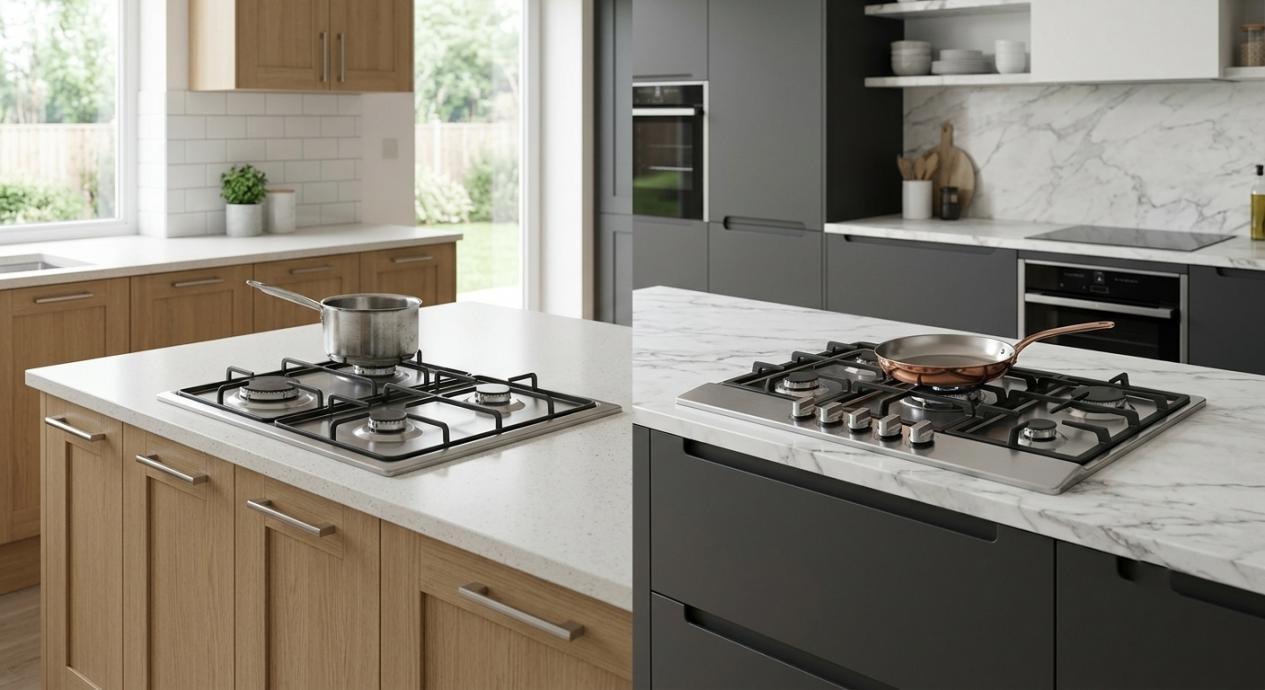
Short Answer: For premium residential, hospitality, and commercial kitchen projects, 304 stainless steel is generally the preferred choice because it provides higher corrosion resistance, better durability, and longer-lasting appearance. 201 stainless steel is a cost-effective alternative for budget-focused projects with lighter usage conditions.
The Hidden Cost Behind Stainless Steel Selection
With over ten years of experience in the kitchen appliance industry, I’ve seen many distributors, contractors, and project buyers prioritize the upfront unit price of stainless steel cooktops. A difference of only a few dollars per unit can become a major decision when ordering hundreds or thousands of units. However, for premium residential, hospitality, and commercial projects, the lowest purchase price does not always represent the lowest total cost of ownership (TCO).
If you’re a project buyer, distributor, contractor, or hospitality supplier, the choice between 201 and 304 stainless steel affects product lifespan, maintenance requirements, customer satisfaction, customer retention, and your project’s reputation.
Based on real project experience, 304 stainless steel is often preferred for premium applications because it offers stronger corrosion resistance and better long-term durability. 201 stainless steel remains a practical and reliable option for budget-oriented projects with lighter usage conditions.
Why Stainless Steel Grade Matters for Cooktops?
Stainless steel gas hobs and cooktops don’t just handle high heat. Every day they face steam, grease, food acids, commercial cleaning chemicals, and humidity — especially in commercial kitchen and hospitality environments where cleaning frequency and operating intensity are much higher.
For end users, a cooktop that starts looking worn affects their entire kitchen experience and perception of quality. For distributors and project suppliers, this can translate into more warranty claims, replacement costs, and potential damage to brand reputation. That’s why understanding the real differences between 201 and 304 grades matters when selecting stainless steel gas hobs or cooktops.
304 vs 201 Stainless Steel Cooktops: Key Differences
Here’s a clear comparison based on real-world performance:
| Factor | 201 Stainless Steel | 304 Stainless Steel |
|---|---|---|
| Material positioning | Cost-effective option | Premium grade |
| Initial cost | Lower | Higher |
| Corrosion resistance | Moderate | Excellent |
| Humidity resistance | Good under normal indoor conditions | Better for humid environments |
| Commercial kitchen suitability | Suitable for light-duty applications | Recommended for heavy-duty applications |
| Long-term appearance | More maintenance needed | Better appearance retention |
| Lifecycle Cost | Lower upfront cost but potentially higher maintenance risk | Higher initial investment with potentially lower long-term maintenance requirements |
| Best for | Cost-sensitive residential and light-duty applications | Premium residential, hospitality, and commercial applications |
These differences reflect different applications rather than one material being universally better than the other. At CHEFF, we manufacture both grades and focus on matching the material to your specific project needs rather than simply recommending the most expensive option.
Why Premium Kitchen Projects Prefer 304 Stainless Steel?
Better Performance in High-Humidity Environments
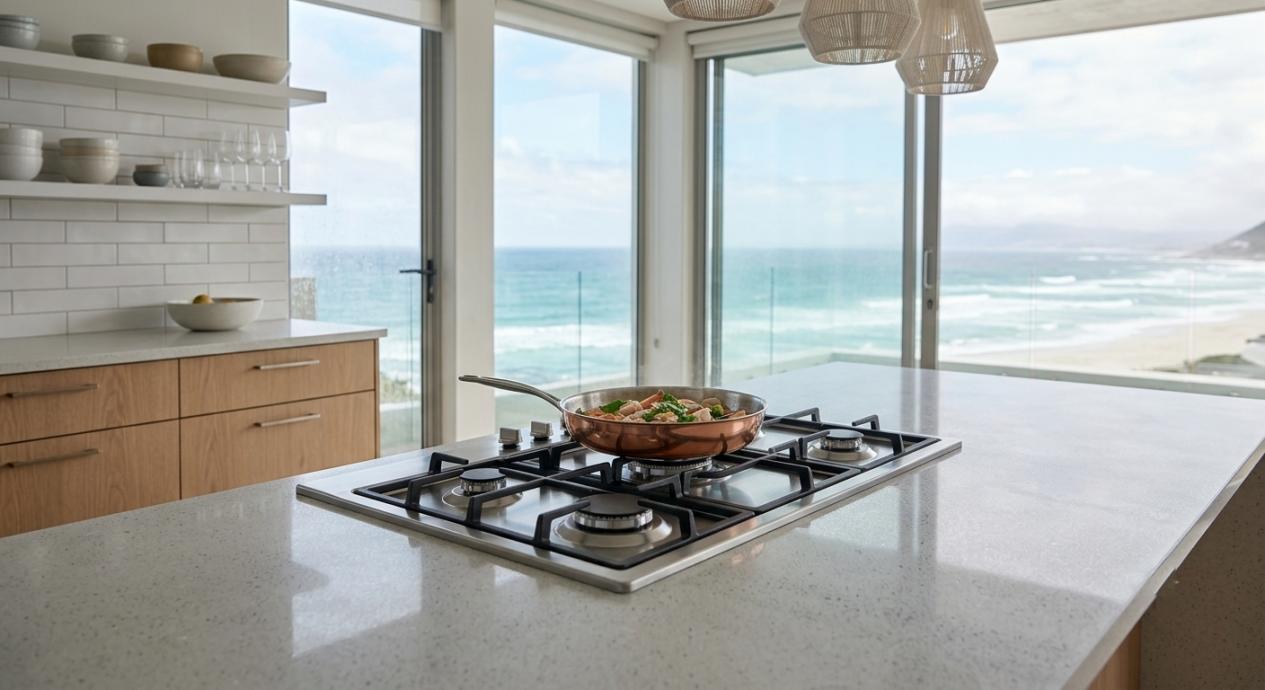
Stainless steel grades with lower corrosion resistance may develop surface discoloration or rust spots earlier in coastal areas, marine climates, and humid environments. Salt-laden air and persistent moisture accelerate these issues.
304 stainless steel performs significantly better in these conditions. Compared with 201 stainless steel, 304 typically has a higher nickel content, which contributes to better corrosion resistance and material stability. This improved corrosion resistance is especially valuable in environments exposed to moisture, salt, and frequent cleaning. Chromium helps form a passive oxide layer on the surface that protects against corrosion. This combination helps our 304 stainless steel gas hobs maintain a clean, professional appearance longer.
Better Choice for Commercial Kitchens
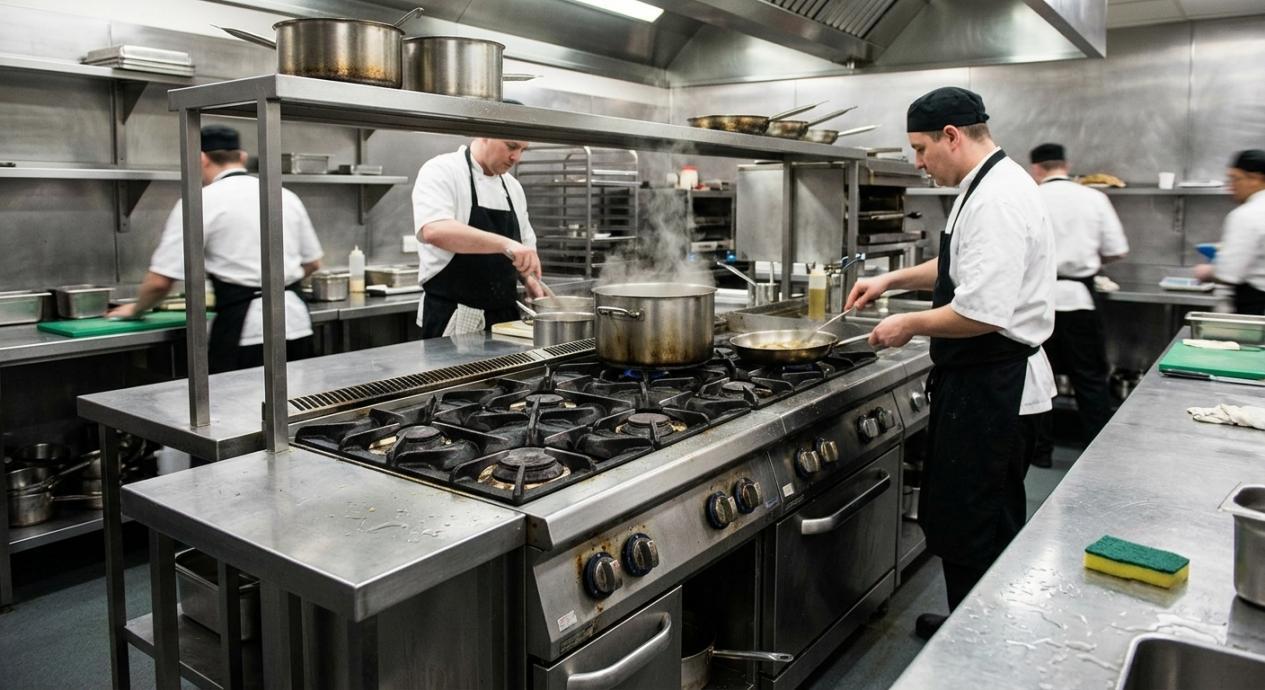
In commercial kitchen applications, 304 stainless steel is widely preferred for professional kitchen equipment. Restaurants, hotels, and catering facilities deal with frequent washing, commercial detergents, acidic food residues, high-temperature cycles, and heavy daily use. This is especially important in kitchens operating multiple hours per day, where equipment must maintain both appearance and reliability after repeated cleaning cycles.
304-grade surfaces generally provide better resistance to pitting and staining, reducing service needs in demanding hospitality environments.
Protecting Project Reputation
For developers, contractors, or suppliers, kitchen equipment contributes directly to the overall user experience. Issues like rust marks or degraded surfaces can lead to negative feedback, higher warranty costs, and long-term reputation damage. Choosing 304 helps safeguard long-term project success.
Is 201 Stainless Steel Still a Good Choice?
Absolutely — when used in the right context. The goal is not choosing the most expensive material, but choosing the right material for the expected operating environment.
201 stainless steel performs well for:
Budget residential projects such as affordable apartments and rental properties
Low-moisture indoor applications in standard home kitchens or drier climates
Price-sensitive markets focused on cost efficiency and volume
When properly manufactured and used in suitable environments, 201 stainless steel can still provide reliable performance for many residential applications.
For Distributors: Should You Offer 201 or 304 Stainless Steel Cooktops?

Many distributors successfully carry both grades to serve their full customer base.
201 product line works well for price-sensitive markets, volume sales, and entry-level customers. 304 product line targets premium residential projects, hotels, and contractors who prioritize long-term performance.
This allows distributors to offer different price points without positioning all products as low-cost solutions. The best strategy is to offer both options and help customers match the grade to their specific segment and application requirements. This approach helps distributors build a more flexible product portfolio of stainless steel cooktops and serve different customer segments effectively.
304 vs 201 Stainless Steel: Choosing Based on Project Type
Use this guide to match the material to your project needs:
| Project Type | Recommended Material | Reason |
|---|---|---|
| Luxury villas / apartments | 304 | Premium appearance and long-term durability |
| Residential developments | 304 | Long-term appearance expectations |
| Boutique hotels | 304 | Premium guest experience |
| 5-star hotels | 304 | Heavy usage and quality expectations |
| Coastal apartments | 304 | Better corrosion resistance |
| Commercial kitchens | 304 | Frequent cleaning and heavy operation |
| Mid-range residential projects | 304 or 201 | Depends on positioning |
| Budget housing projects | 201 | Cost control |
Why Lower Purchase Cost Does Not Always Mean Lower Project Cost?
For example, a $5 price difference per unit on a 1,000-unit order represents $5,000 in upfront savings. However, replacement units, labor costs, shipping expenses, and customer service handling can quickly reduce this advantage. The initial saving should always be evaluated together with the total lifecycle cost.
Many projects find that investing in more durable materials helps reduce service requirements and customer complaints over the product lifecycle.
How Buyers Can Verify Stainless Steel Quality Before Bulk Orders?
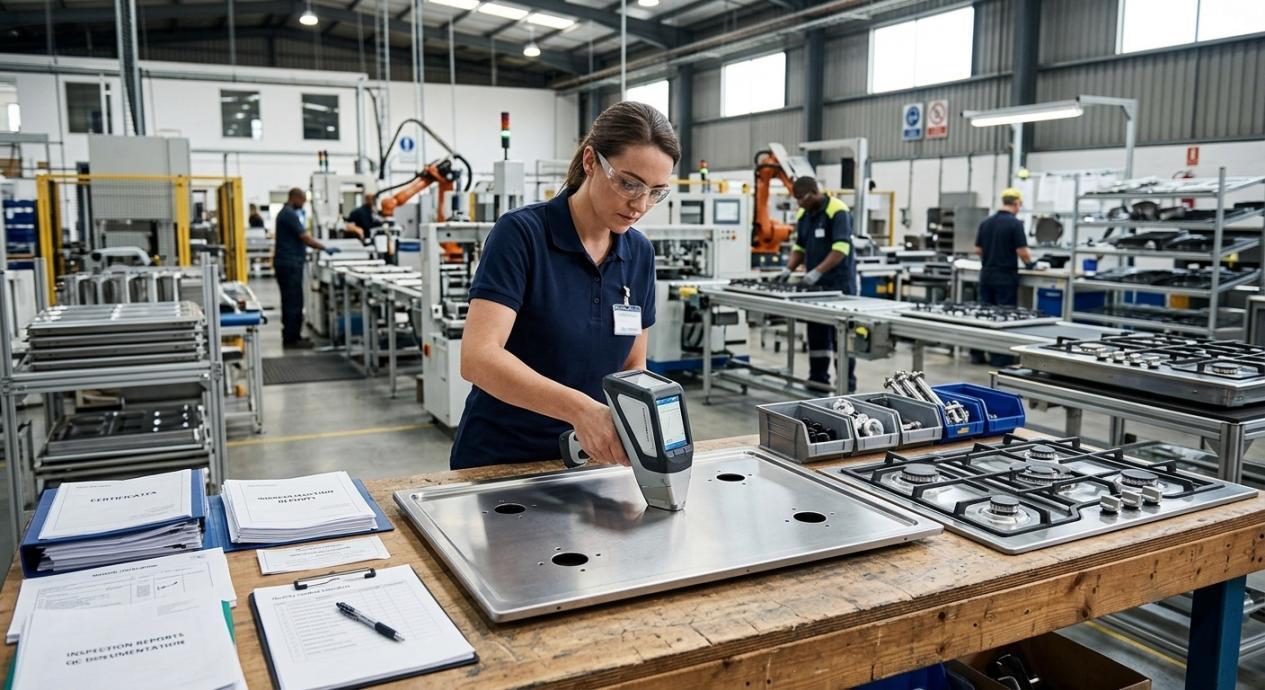
Protect your projects with these practical steps:
Material Specification — Confirm “SUS304” or “AISI 304” in documents. Some suppliers may describe stainless steel as “304 quality” without providing traceable material documentation. Always verify the grade before mass production.
Material Certificate — Request the Mill Test Certificate (MTC).
Supplier Testing Capability — Ask for PMI testing or XRF verification.
Sample Testing — Evaluate surface quality and workmanship before mass production.
Panel Thickness — Appropriate panel thickness helps improve rigidity and resistance to deformation. Excessively thin panels may affect rigidity and long-term appearance.
Manufacturing Quality — Forming, welding, and surface finishing quality also influence long-term durability and appearance.
Avoid relying only on magnet tests — Magnet tests cannot accurately identify stainless steel grades. Professional buyers should rely on material certificates and verification testing rather than appearance or simple magnetic checks.
When working with a trusted stainless steel cooktop manufacturer, clear documentation and quality control procedures make verification much easier.
Frequently Asked Questions About 304 and 201 Stainless Steel Cooktops
Q1: Can stainless steel cooktops rust?
Yes, stainless steel cooktops can develop rust spots under certain conditions.
Stainless steel is corrosion-resistant, but it is not completely immune to corrosion. Exposure to salt air, high humidity, acidic food residues, harsh cleaning chemicals, or lower-grade stainless steel materials can increase the risk of discoloration and rust.
For premium kitchen projects, choosing 304 stainless steel helps improve corrosion resistance and maintain a clean appearance over long-term use.
Q2: Is 304 stainless steel better than 201 for cooktops?
Yes, 304 stainless steel generally provides better corrosion resistance and long-term durability than 201 stainless steel.
The main difference comes from material composition. 304 stainless steel typically contains more nickel than 201 stainless steel, which improves corrosion resistance and stability, especially in humid, coastal, and high-use environments.
201 stainless steel is a more cost-effective option and can perform well in indoor applications where moisture exposure and cleaning intensity are limited.
Q3: Is 304 stainless steel worth the extra cost for kitchen projects?
For premium residential, hospitality, and commercial projects, 304 stainless steel is often worth the additional investment.
Although the initial cost is higher, its improved corrosion resistance can help reduce maintenance requirements, replacement costs, and customer complaints over the product lifecycle.
For budget-focused projects, 201 stainless steel may still provide a practical balance between cost and performance.
Q4: How can I tell if a cooktop uses real 304 stainless steel?
The most reliable way is to verify documentation and testing rather than relying on appearance alone.
Buyers should check:
Material specification (SUS304 or AISI 304)
Mill Test Certificate (MTC)
PMI or XRF verification when required
Supplier quality control procedures
A professional supplier should be able to provide clear material information before bulk production.
Q5: Can 201 stainless steel replace 304 stainless steel?
Sometimes, but not for every application.
201 stainless steel can be suitable for:
Budget residential projects
Dry indoor kitchens
Price-sensitive markets
However, for coastal properties, hotels, commercial kitchens, and high-frequency cooking environments, 304 stainless steel is usually the safer choice because it provides better corrosion resistance and longer-lasting appearance.
Choosing the Right Stainless Steel Is About Long-Term Value
201 stainless steel provides clear cost advantages and suits many budget-conscious applications well. 304 stainless steel delivers superior durability and corrosion resistance, making it the preferred choice for premium projects and high-value kitchen applications where long-term appearance and reliability are priorities.
If you are selecting stainless steel cooktops for a residential, hospitality, or commercial project, CHEFF helps distributors, contractors, and project buyers select the right stainless steel cooktop solution based on application requirements, market positioning, OEM needs, and long-term value. Contact CHEFF to discuss the right stainless steel grade, OEM requirements, and cooktop solutions for your next project.