Brass vs Aluminum Burner Caps: Is Brass Worth the Higher Cost?
- Share
- publisher
- CHEFF
- Issue Time
- Aug 3,2026
Summary
Brass burner caps offer better durability, flame stability, and lower after-sales risks, but cost more. Compare brass vs aluminum caps in performance, heat conductivity, cost, and market positioning.
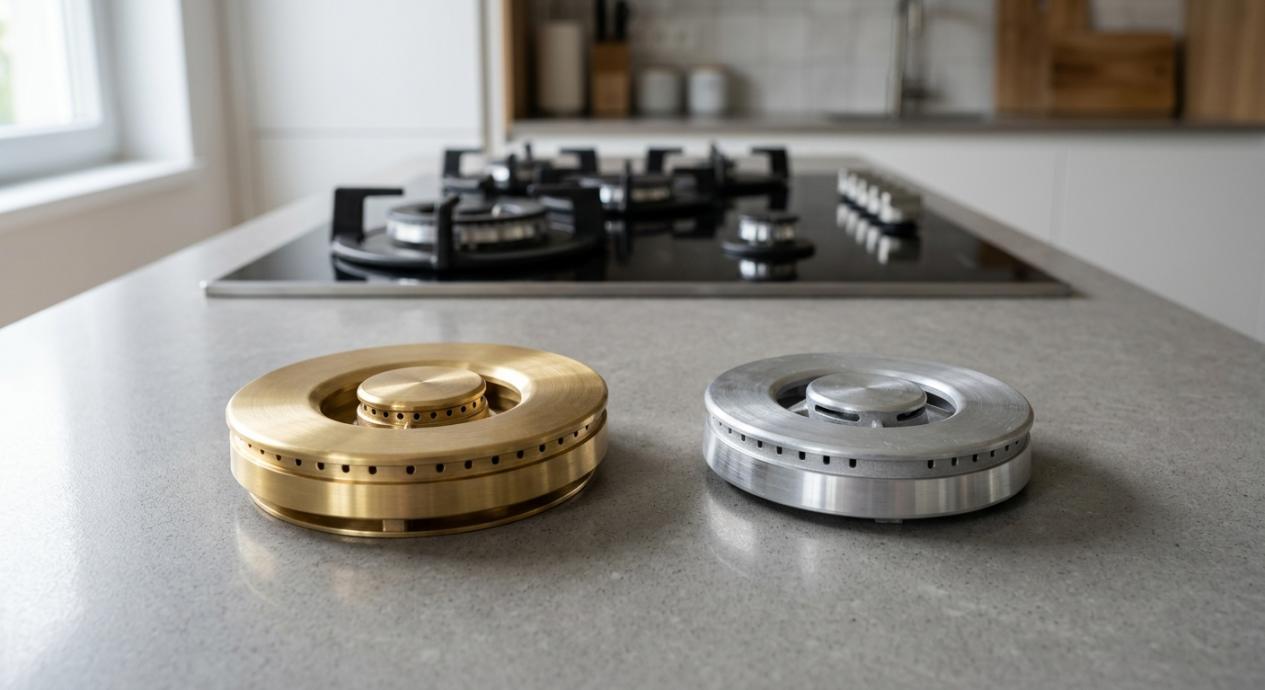
Table of Contents
Quick Answer
Brass burner caps are not automatically the best choice for every gas hob. However, the higher cost can be justified when buyers need stronger long-term durability, more stable flame performance, and lower after-sales risks.
When you source gas hobs for overseas markets, what usually tops your checklist? Burner power, glass thickness, stainless steel grade, and overall design. Yet some of the components customers rarely notice are often the ones that create complaints later. Gas hob burner cap material is a clear example—it influences flame stability, long-term durability, maintenance requirements, and the customer experience after months of daily use.
Over years of working with gas hob manufacturers and importers, one lesson is clear: small component choices can have a major impact on long-term product reliability. After-sales feedback often involves burner caps that deform, lose shape stability, or affect flame consistency over time. So the practical question becomes: is a brass burner cap really worth the extra cost compared with aluminum?
Why Burner Cap Material Matters in Gas Hobs
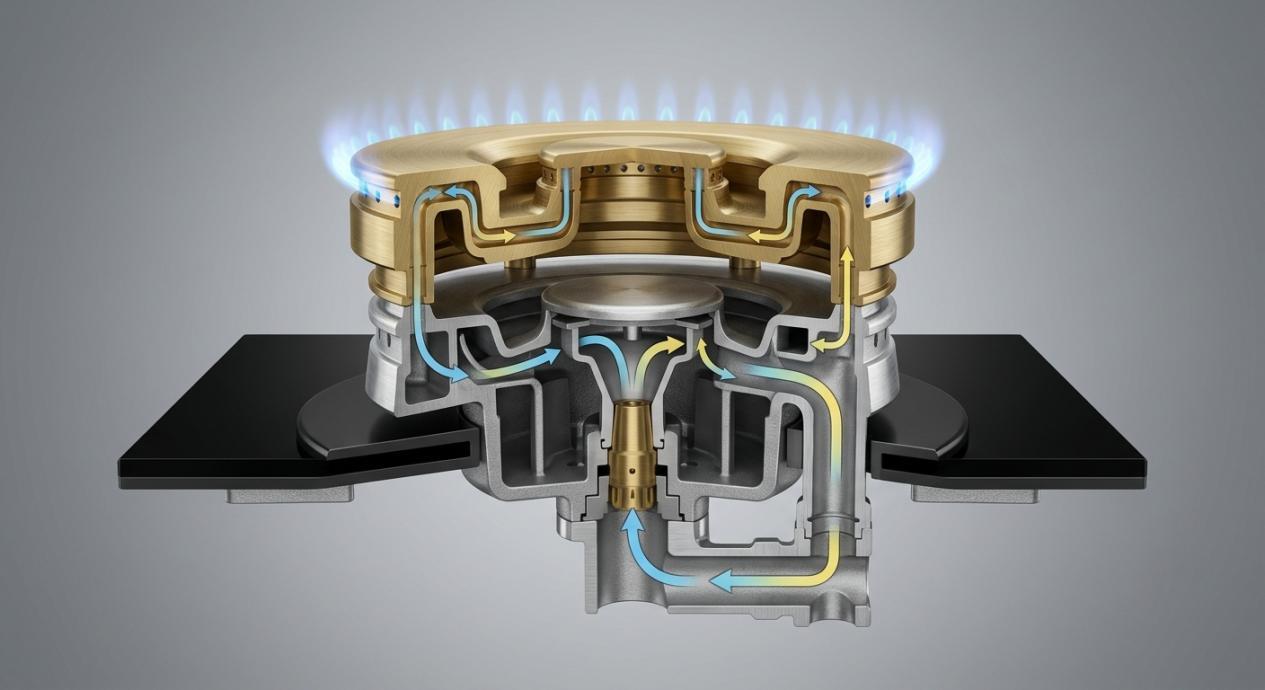
The burner cap is not just a decorative cover. Its value is not only about the material itself, but about how well it maintains performance over time. Its role is less about increasing maximum heat output and more about supporting stable combustion across repeated use cycles.
Think of the gas path this way:
As the final component influencing flame distribution, the burner cap material plays an important role in long-term combustion stability. Its choice directly affects three outcomes that matter to buyers:
- Durability under repeated heat cycles
- Flame stability through consistent port alignment
- After-sales impact from replacement needs and customer complaints
These factors determine whether the hob continues to perform as expected years after installation.
Brass vs Aluminum Burner Caps: Quick Comparison
Here is a practical side-by-side view many importers use when comparing the two options:
| Feature | Brass Burner Cap | Aluminum Burner Cap |
|---|---|---|
| Mechanical strength | Generally higher | Depends on alloy selection |
| Heat-cycle resistance | Very strong | Suitable for normal household use |
| Thermal conductivity | Good | Higher, but not the only performance factor |
| Shape stability | Excellent | Depends on design and alloy |
| Corrosion resistance | Good | Depends on surface treatment |
| Weight | Heavier | Lighter |
| Cost | Higher | Lower |
| Market positioning | Premium | Budget-friendly |
Neither material wins every category. The decision depends on expected usage and product positioning.
Why Are Brass Burner Caps More Expensive?
The higher price of brass burner caps is not arbitrary. Three practical factors drive the difference.
Raw Material Cost
Brass is more expensive than common aluminum alloys used for burner caps.
Manufacturing Requirements
Brass components often require different casting and machining processes, along with tighter dimensional control. For importers, the higher cost is also related to maintaining consistent quality across production batches.
Product Positioning
Many manufacturers use brass in higher-specification ranges where durability requirements and market positioning justify the additional material cost.
The real question is what additional value buyers receive from that higher initial investment.
Durability Comparison: Which Material Handles High Heat Better?
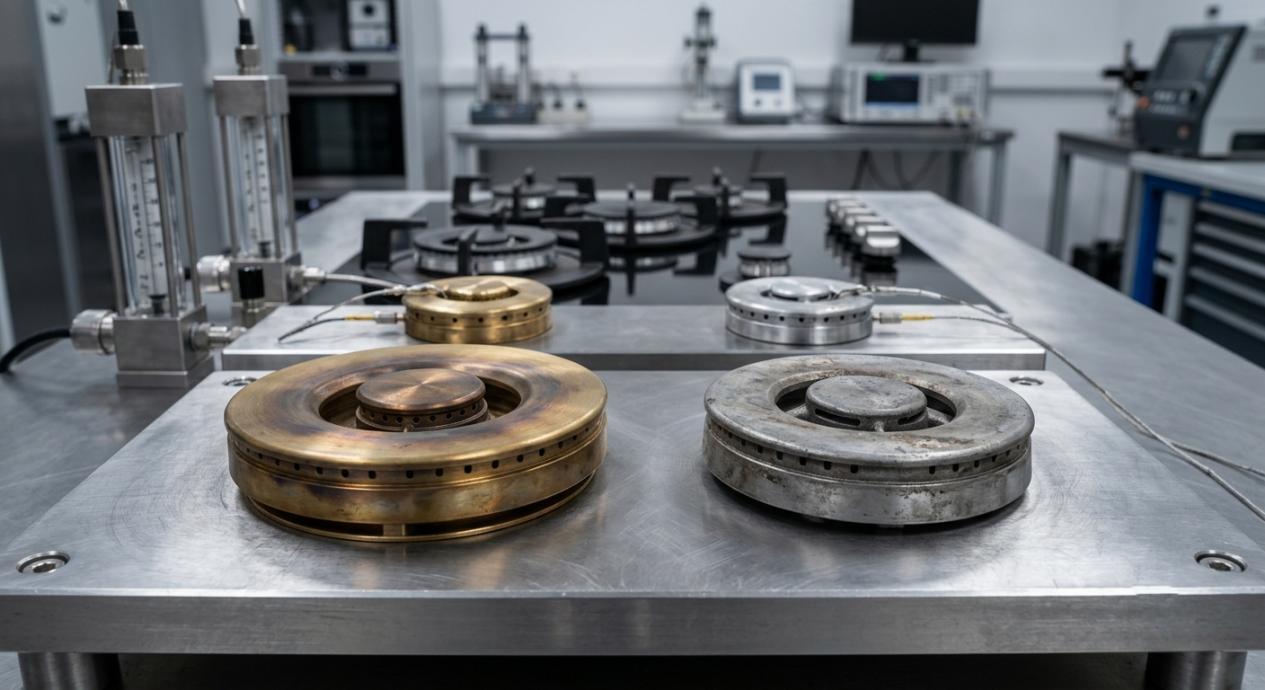
Most buyers asking this question are actually concerned about one thing: how the material performs after years of repeated heating cycles.
Brass generally shows stronger dimensional stability during repeated high-temperature cooking cycles. It resists deformation more effectively, which helps keep the flame ports in their original alignment. That stability supports consistent combustion and longer service life when the burner design and manufacturing quality are properly controlled.
Aluminum is lighter and more affordable. Under normal household conditions it performs adequately. Depending on alloy selection and burner design, its lower mechanical strength compared with brass can lead to gradual shape changes over time in heavy-use applications. Caps that look fine after the first year may begin to show subtle deformation under frequent high-temperature cooking—especially in markets with intensive daily use.
Heat Conductivity vs Flame Stability: What Really Matters?
You will often hear that aluminum has better thermal conductivity. That statement is accurate. Yet higher thermal conductivity does not automatically translate into better burner performance on a gas hob.
What matters more is the ability of the cap to hold its geometry. Material stability protects burner-cap shape. Stable shape keeps flame-hole alignment correct. Correct alignment supports steady gas-air mixing and reliable flame quality. In practice, dimensional stability frequently delivers more consistent everyday results than conductivity alone.
Uneven gas flame patterns can result from geometry changes, blocked ports, gas supply issues, or other combustion factors—not simply the conductivity of the metal. For buyers, the key takeaway is that material stability often matters more than conductivity numbers alone. This is why professional buyers evaluate burner materials based on overall performance, not a single metal property.
Why Does a Brass Burner Cap Turn Black After Use?
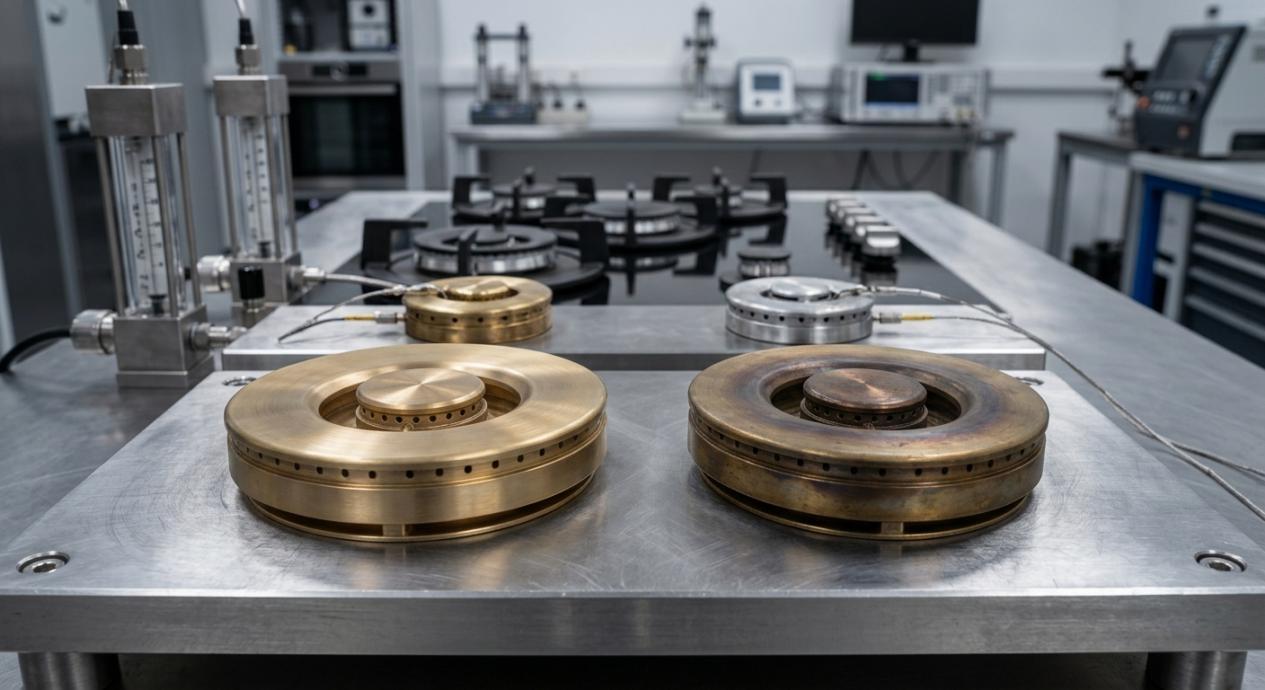
This is also one of the most common reasons buyers question whether the color change indicates a quality issue. Many end users notice that a new brass burner cap starts bright golden and later develops a darker surface.
High-temperature exposure causes natural oxidation and the formation of a surface patina. Fresh brass looks golden; after repeated heating it darkens. Color change alone does not mean the burner cap has failed.
You should investigate further only when you also see cracks, obvious deformation, uneven flame patterns, or a loose fit. For routine care, mild cleaning methods are usually sufficient and help maintain appearance without aggressive abrasives. Explaining this natural aging process before delivery can help suppliers reduce unnecessary after-sales questions—especially in markets where customers expect brass to maintain its original golden appearance.
Corrosion, Maintenance and Long-Term Appearance
The real comparison is not which material never corrodes, but which one creates lower maintenance burden and fewer appearance-related complaints over time.
Brass offers solid corrosion resistance and a durable surface. It can still oxidize and change color, yet structural integrity typically holds up well under normal kitchen conditions.
Aluminum is lightweight, but its long-term behavior depends heavily on surface treatment quality. In real kitchens the caps face oil, moisture, and cleaning chemicals. When surface protection is insufficient, appearance degradation can appear earlier. Matching the alloy and coating to the expected duty cycle is more useful than simply asking whether aluminum is “good” or “bad” for gas stove burners. For importers, the right choice should also consider local user habits, cleaning practices, and expected product lifespan.
Cost vs Lifetime Value: Is Brass Worth the Extra Cost?
For B2B buyers, the question is not only “How much does the burner cap cost?” but “What will this material cost over the product’s lifetime?”
Looking only at the purchase price favors aluminum. Looking at total lifetime cost changes the picture for many buyers.
| Factor | Aluminum | Brass |
|---|---|---|
| Initial purchase cost | Lower | Higher |
| Replacement risk | Potentially higher | Potentially lower |
| Premium positioning | Limited | Strong |
| Heavy-use suitability | Medium | High |
| After-sales risk | Potentially higher | Lower |
Aluminum keeps product cost down and works well for entry-level lines. Brass carries a higher material cost but often reduces replacement risk, customer complaints, warranty claims, and reputation risk. For brands aiming at mid-to-premium positioning, the lifetime value calculation frequently supports the higher initial investment—especially when warranty pressure and customer satisfaction are important factors.
For distributors working across multiple gas standards, burner material is only one part of the equation. Incorrect gas configuration can lead to performance issues and after-sales risks even with premium components. See how LPG to NG conversion impacts burner performance and reliability.
Brass or Aluminum? Choose Based on Your Market Position
Different markets and product positions reward different choices:
| Market / Positioning | Recommended Choice | Reason |
|---|---|---|
| Entry-level residential | Aluminum | Cost control |
| Mid-range household | Mixed solution | Balance of cost and performance |
| Premium residential | Brass | Helps justify higher retail positioning |
| High-use commercial kitchen | Brass | Frequent-use durability |
Premium residential and high-use commercial projects are usually the applications where brass provides the clearest value because buyers prioritize reliability over the lowest initial cost.
What Should Gas Hob Importers Check Before Choosing Burner Materials?
Before locking in a specification, review these practical points:
Supplier Capability
Confirm the manufacturer can provide flame tests, combustion data, and consistent QC records.
Material Specification
Confirm the exact brass grade or aluminum alloy used.
Manufacturing Consistency
Check weight tolerance, dimensional accuracy, and batch consistency.
Flame Testing
Verify flame stability and combustion performance.
Gas Compatibility
Ensure the design works with local LPG or natural gas.
Long-Term Spare Parts Support
Confirm replacement component availability for future after-sales service.
These checks catch most problems that appear after the first shipment.
Conclusion
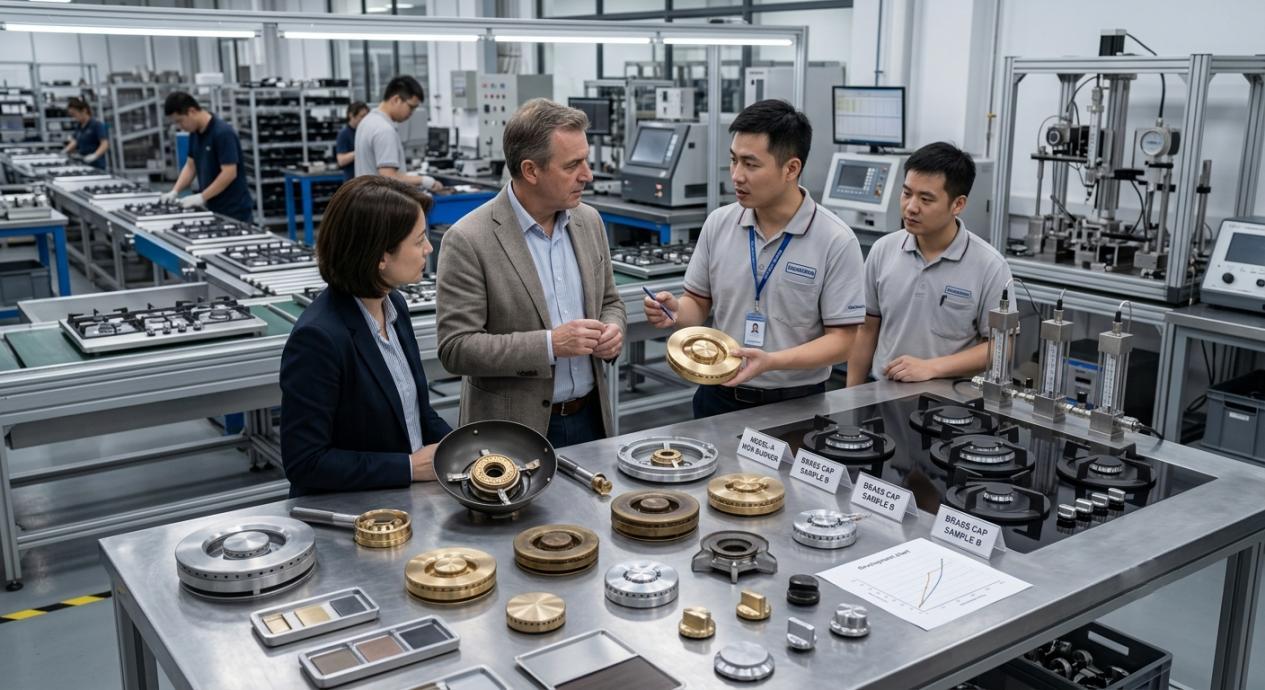
The best burner-cap material depends on your target market, product positioning, and expected usage conditions. Aluminum works well for cost-sensitive products. Brass is often preferred for premium and heavy-duty gas hobs where long-term reliability justifies the higher cost. Material selection should consider lifetime value, not only the initial purchase price.
CHEFF helps global buyers select burner solutions based on market requirements, gas types, and product positioning. If you are evaluating options for your next range, share your target segment and we can help weigh the practical trade-offs.
FAQ
Q1. Is a brass burner cap better than an aluminum burner cap?
Brass generally provides better long-term durability and shape stability, while aluminum remains a practical choice for cost-sensitive applications.
Q2. Are brass burner caps worth the extra cost?
For premium and heavy-use gas hobs, the longer service life and lower maintenance risk can justify the higher cost.
Q3. Why does my brass burner turn black?
High-temperature oxidation can darken brass surfaces. Color change alone does not mean the burner cap has failed.
Q4. Do aluminum burner caps deform?
Aluminum burner caps can perform well under normal conditions. Alloy quality, design, and usage conditions all affect performance.
Q5. Which burner material is best for commercial kitchens?
Brass is commonly preferred because commercial kitchens require frequent and intensive cooking. However, burner design and maintenance conditions also play important roles.
Q6. How long do brass burner caps last?
There is no fixed lifespan because service life depends on burner design, usage frequency, gas type, and maintenance. Brass caps are generally selected for applications where long-term durability is a priority.