Battery Ignition vs Piezo Ignition Gas Stoves: How to Choose the Right System for Your Market
- Share
- publisher
- CHEFF
- Issue Time
- Jul 30,2026
Summary
Compare battery ignition and piezo ignition for gas stoves. Learn which system suits your market: premium built-in hobs, tabletop cookers, outdoor portable stoves, or commercial projects.
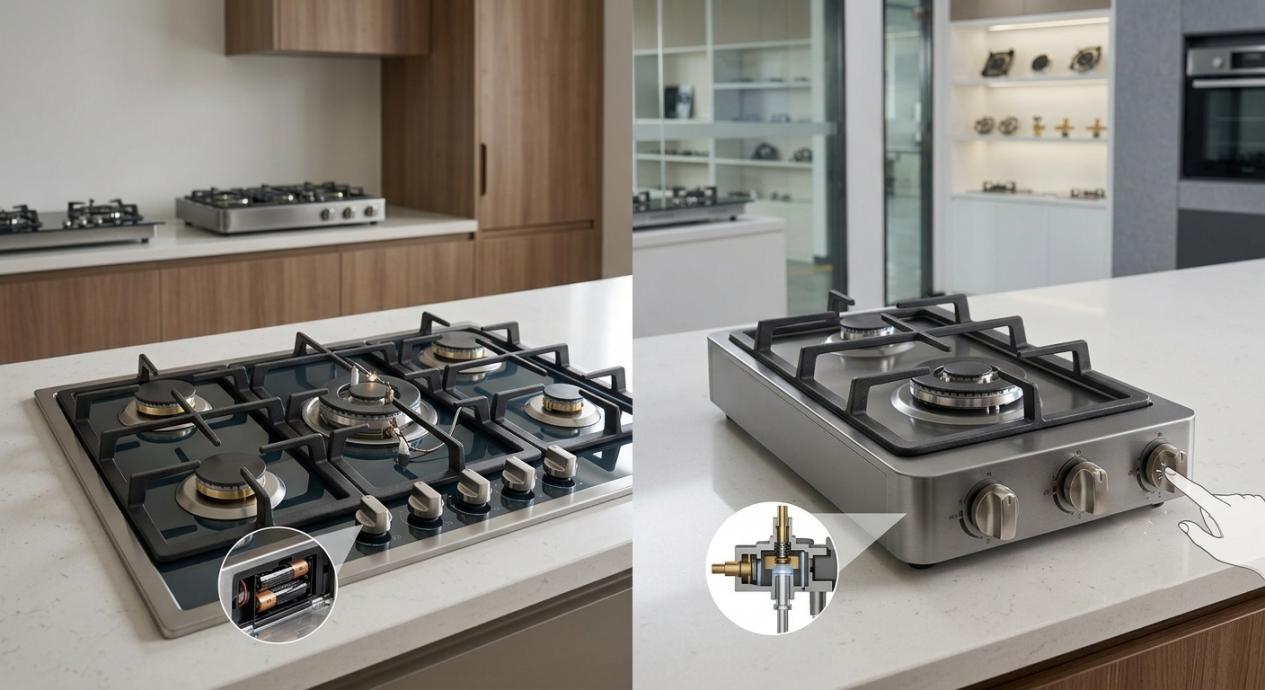
Short Answer: Battery ignition focuses on convenience — users simply turn the knob and sparks appear automatically, creating a premium experience. Piezo ignition focuses on simplicity and independence from batteries — no replacement, no leakage concerns, and lower long-term maintenance. Neither is universally better. The right choice depends on your target market, product category, and customer expectations.
When you source gas hobs for overseas markets, most buyers focus first on burner power, glass or stainless steel tops, number of burners, and overall appearance. Those specs matter. Yet the ignition system is equally critical. It directly affects user experience, after-sales service costs, and how the product is positioned in your target market.
The best ignition system is never universal. The right choice depends on your target market, product category, and customer expectations.
Quick Answer: Battery Ignition vs Piezo Ignition
| Aspect | Battery Ignition | Piezo Ignition |
|---|---|---|
| Best for | Premium residential gas hobs | Cost-conscious products and portable cooking appliances |
| Power source | Battery-powered | Mechanical energy |
| Main advantage | Convenience | No battery dependency |
| Maintenance | Battery replacement needed | Simple maintenance |
| Reliability | Consistent when properly designed | Reliable with quality components |
| Typical products | Built-in gas hobs | Tabletop cookers, portable stoves |
What Is an Automatic Ignition System on a Gas Hob?
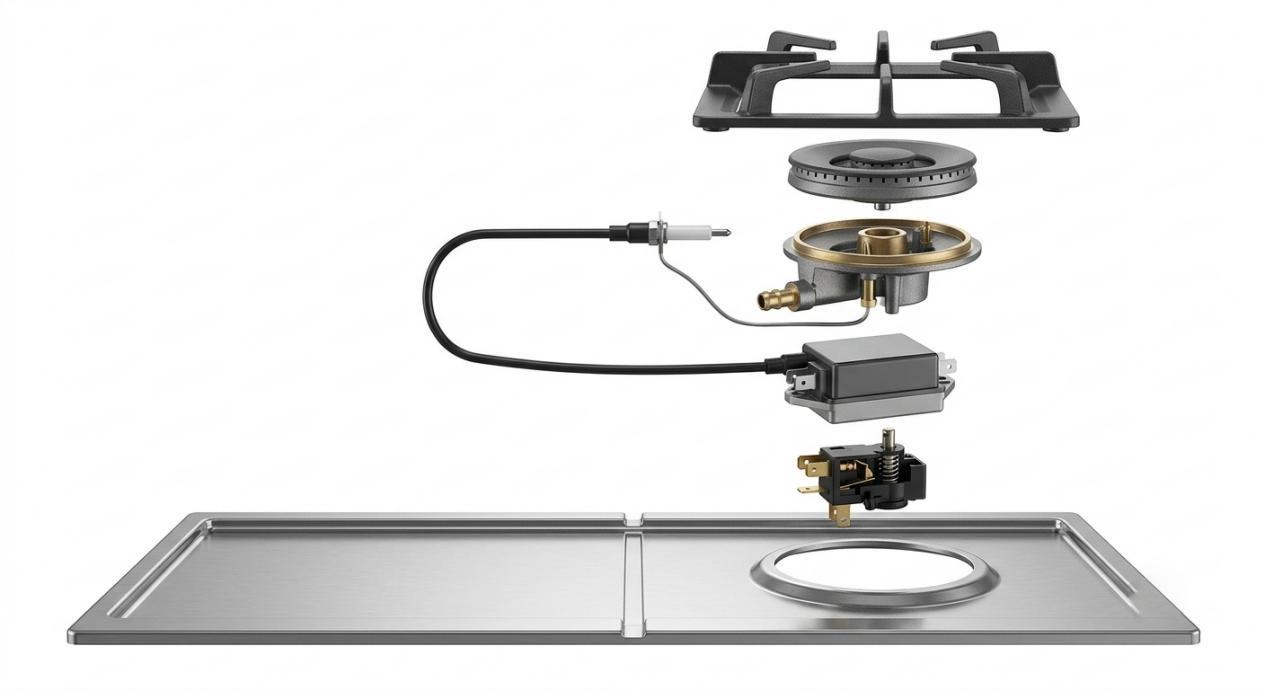
Different gas stove ignition types use different methods to create a spark, but an automatic ignition system on a gas hob typically includes an ignition switch, spark generator, electrode, ignition cable, and in battery systems, a battery box. When you turn the control knob, the system delivers a high-voltage spark to ignite the gas at the burner.
From a buyer's perspective, the ignition system influences more than just lighting the flame. It affects how premium the product feels, whether it sits in the entry-level, mid-range, or premium segment, how much after-sales support you will need to provide, and how the product compares against competitors in the same price band.
Battery Ignition System Explained
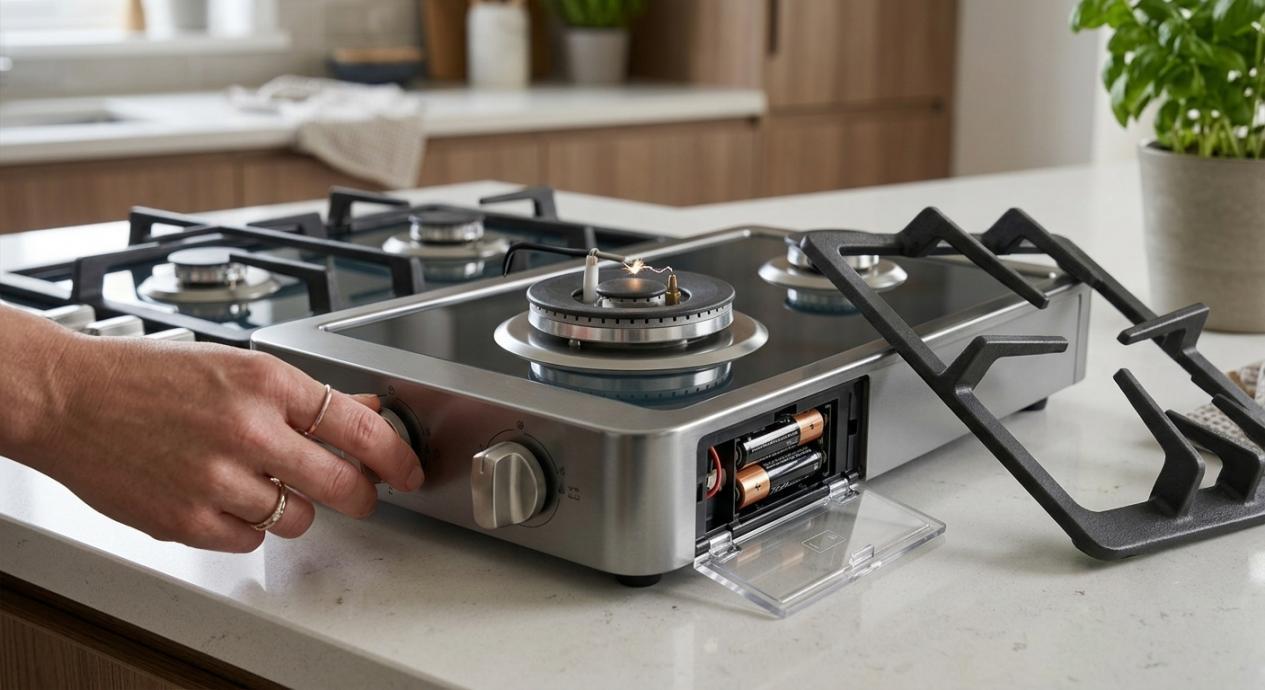
Battery ignition uses electrical energy from a battery (commonly AA) to create high-voltage pulses. These pulses travel through the ignition module and electrodes to create sparks at the burners.
Advantages
The biggest benefit is convenience. Users simply turn the knob and the spark appears automatically, no extra buttons or repeated pressing. This consistent performance suits multi-burner gas hobs and built-in models where a smooth, premium user experience is expected. Battery ignition also allows easier integration with additional safety features such as flame failure devices and re-ignition functions.
Limitations
Batteries need periodic replacement. Long storage periods (common for importers holding stock) may increase the risk of battery leakage if batteries are left installed for extended periods. In markets with limited access to quality replacement batteries, this can become a recurring consumer complaint.
Piezo Ignition System Explained
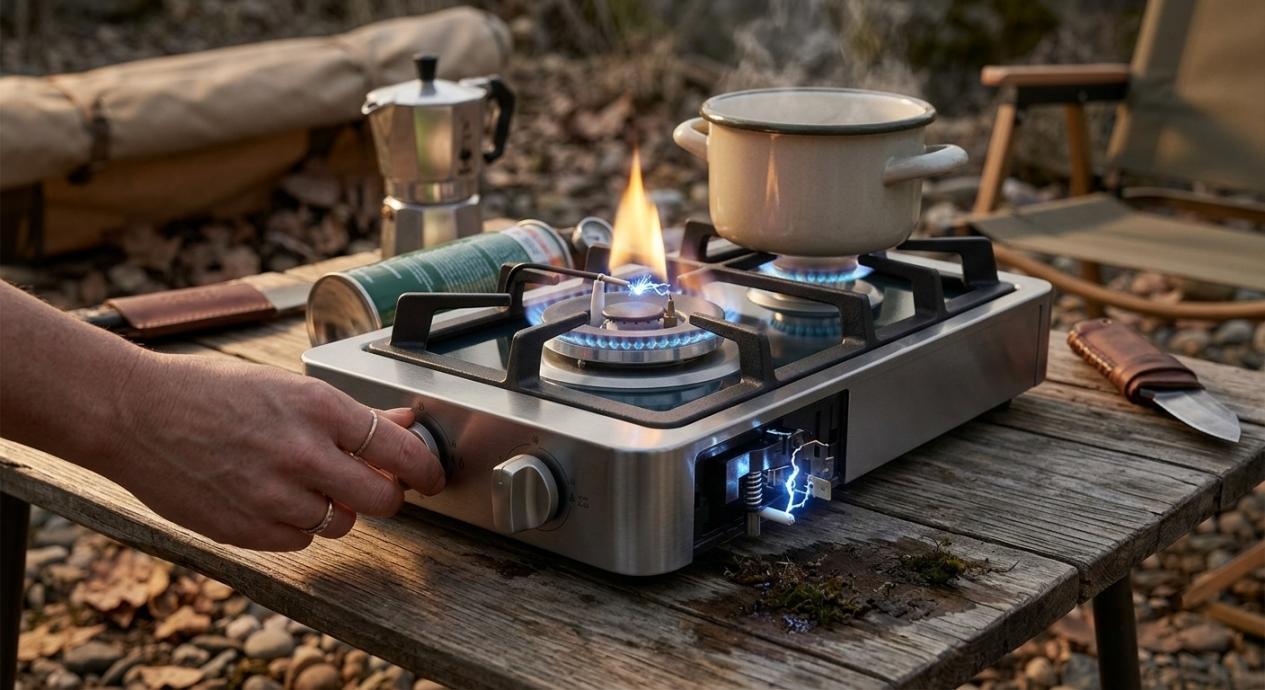
Piezo ignition works through mechanical pressure. Pressing or turning the control compresses a piezoelectric crystal, which generates an electric charge and creates a spark, no external power required.
Advantages
No battery means no battery replacement and no leakage concerns. This makes piezo ignition suitable for portable gas cookers, outdoor cooking appliances, and regions with unstable electricity supply. The simpler structure also contributes to lower manufacturing costs and easier maintenance for basic service teams.
Limitations
Operation requires clearer physical feedback from the user compared with electronic battery systems. Performance varies significantly with component quality, design, and assembly precision. Inconsistent sparking is often more noticeable on piezo systems when low-cost components are used.
Battery Ignition vs Piezo Ignition: Complete Comparison
Technical Comparison
| Factor | Battery Ignition | Piezo Ignition |
|---|---|---|
| Energy source | Battery | Mechanical pressure |
| Ignition method | Electronic spark | Piezoelectric spark |
| System complexity | Higher | Simpler |
| Maintenance | Medium | Low |
| Battery required | Yes | No |
Business and Purchasing Comparison
| Factor | Battery | Piezo |
|---|---|---|
| Product positioning | Mid-range to premium | Cost-focused to mid-range |
| User experience | Excellent | Good |
| Product cost | Higher | Lower |
| After-sales focus | Battery-related | Mechanical wear |
| Suitable customers | Customers prioritizing convenience | Cost-conscious buyers |
Which Ignition System Should Importers Choose?
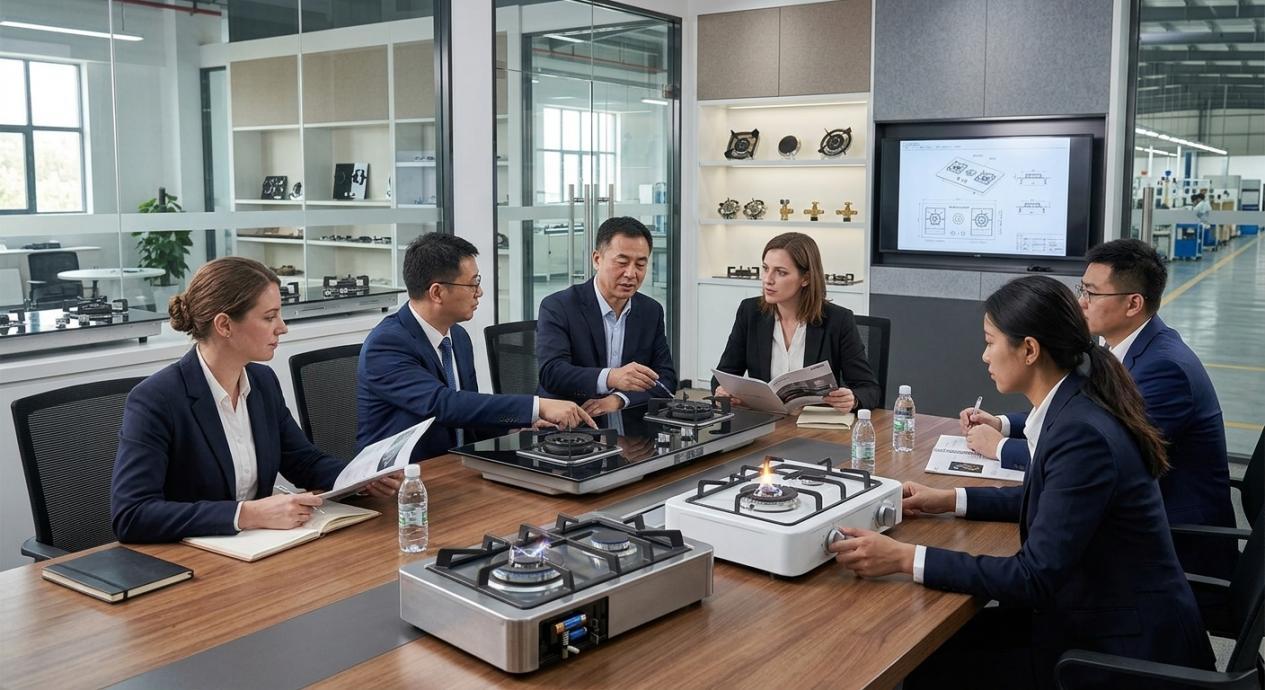
| Customer Situation | Recommended Ignition |
|---|---|
| Premium residential kitchens | Battery ignition |
| Built-in gas hob projects | Battery ignition |
| Cost-conscious retail products | Piezo ignition |
| Portable cooking appliances | Piezo ignition |
| Markets with limited after-sales support | Piezo ignition |
| Regions with unstable electricity supply | Piezo ignition |
| Commercial projects | Depends on usage and maintenance requirements |
For premium built-in gas hobs: Battery ignition
Convenience and consistent spark performance match the expectations of European, North American, and high-end residential projects. Marketing becomes easier when the product feels premium from the first interaction.
For tabletop gas cookers: Piezo ignition
Lower cost, simple structure, and easy maintenance suit cost-conscious markets and budget-focused buyers. These products usually prioritize cost efficiency and wide distribution.
For outdoor and portable cooking: Piezo ignition
No electricity or battery dependency is a clear advantage when power sources are unavailable or unreliable. This makes piezo ignition suitable for portable camp stoves, picnic cookers, and emergency cooking equipment.
For hotel and commercial projects: Depends on usage
There is no single answer. Consider how readily the maintenance team can replace parts, how intensively the units will be used, and how easily spare parts can be supplied locally.
Common Misconceptions About Gas Hob Ignition Systems
Myth 1: Piezo ignition is always more reliable.
Reliability depends on component quality, product design, usage environment, and manufacturing consistency, not solely on the technology.
Myth 2: Battery ignition always causes maintenance problems.
With quality components, proper design, and clear user instructions, battery systems can provide stable performance for years with regular battery replacement as the only ongoing requirement.
Myth 3: Automatic ignition means all systems are the same.
Different types of ignition system serve different market needs. Treating them as interchangeable leads to mismatched products and higher after-sales costs.
Common Ignition Issues That Affect After-Sales Service
Gas hob clicks but does not ignite
Possible causes include an empty battery in battery ignition systems, dirty electrodes, loose connections, or incorrect gas supply. Cleaning the electrode and checking the power source usually resolves this.
Ignition works intermittently
Loose connections, moisture, or component aging are typical culprits. Proper assembly control and moisture protection during manufacturing help reduce these issues.
Igniter keeps clicking
This often points to a switch issue or a problem in the ignition module. Quality control at the assembly stage reduces the frequency of such complaints.
Choosing the Right Ignition System with a Professional Gas Hob Manufacturer
A capable manufacturer does not push one system for every order. Instead, they evaluate product structure, target market, price range, local customer habits, and the buyer's after-sales capability. Asking about ignition options during the inquiry stage signals that you are a serious buyer who understands product differentiation.
FAQ
1. What are the different types of gas hob ignition systems?
Battery ignition and piezo ignition are the two most common automatic methods used today.
2. Is battery ignition better than piezo ignition?
Neither is universally better. Battery ignition prioritizes convenience; piezo ignition prioritizes simplicity and independence from batteries.
3. Do gas hobs need batteries?
Only models fitted with battery ignition systems require batteries.
4. Can a gas hob work without electricity?
Yes. Piezo ignition systems can operate without external electricity because they generate sparks through mechanical pressure. Battery ignition systems only require a small battery, not mains electricity.
5. Which ignition system is best for outdoor cooking?
Piezo ignition is usually preferred because it does not rely on batteries or electricity.
6. Which ignition system has lower after-sales costs?
Piezo ignition usually reduces battery-related maintenance, while battery ignition provides better convenience and user experience. The best choice depends on your market segment and after-sales capability.
7. Which ignition system is suitable for wholesale gas hob buyers?
The choice depends on market positioning, price range, and customer expectations in the destination market.
8. How long does a gas hob ignition system last?
Lifespan depends on component quality, usage frequency, and basic maintenance.
Conclusion
Choosing between battery and piezo ignition is not a purely technical decision. For distributors and importers, the right system depends on product positioning, target market, and after-sales requirements. Battery ignition suits mid-range and premium built-in projects where user convenience drives purchasing decisions. Piezo ignition fits cost-sensitive and portable segments where simple structure and low maintenance matter most.
If you are reviewing your next gas hob range, consider discussing ignition options alongside materials and configurations. CHEFF works with global partners to select the most suitable solutions for each market segment, backed by consistent manufacturing quality and reliable after-sales support.