How to Choose Between Butane and Propane Gas Stoves for Outdoor Use and Wholesale Markets?
- Share
- publisher
- CHEFF
- Issue Time
- Jul 2,2026
Summary
Learn how to choose between butane and propane stoves for outdoor use and wholesale sourcing. Compare performance, climate fit, and OEM options for buyers.
Quick Answer
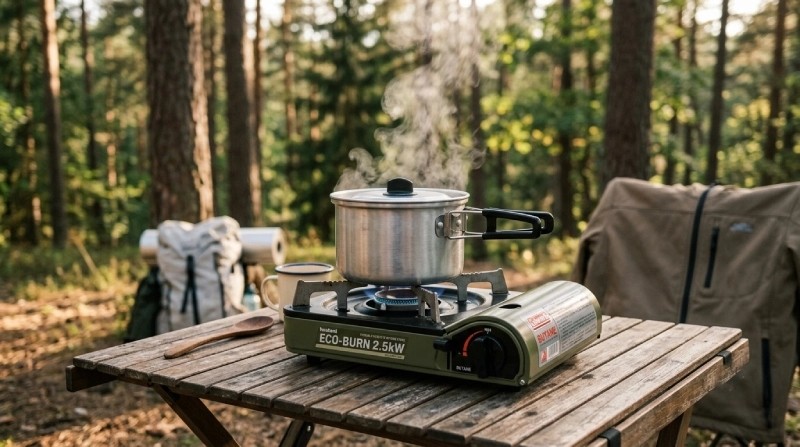
A portable butane gas stove is a lightweight, cartridge-powered device designed for short-duration outdoor cooking in temperate weather. Butane stoves are best for warm-weather portability, while propane stoves are better for cold-weather stability. For procurement success, buyers must match inventory to regional climate zones rather than unit cost alone.
Wholesale buyers frequently face a tough choice when building an outdoor appliance catalog: selecting between butane and propane fuel systems. Sourcing the wrong configuration leads directly to regional product mismatches because no single fuel type works perfectly across all environments.
For an outdoor gas stove wholesale business, getting this decision right keeps stock moving. Delivering the wrong setup to retail partners leads to seasonal inventory bottlenecks, high return rates, and poor user experiences in the field.
What Should Buyers Understand Before Choosing a Butane Stove?
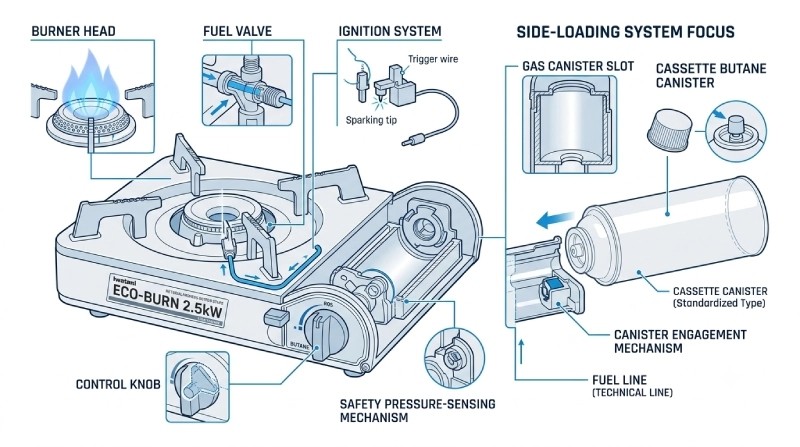
Evaluating a product line from a butane stove manufacturer requires looking closely at its specific operational boundaries. The product selection process should always be based on three critical variables: climate stability, cooking duration, and end-user mobility levels. For a deeper breakdown of product structure and usage scenarios, see our portable butane gas stove guide.
This category of appliance is defined by a low-pressure, integrated fuel system meant strictly for short-duration, high-mobility use in temperate weather conditions. The system logic locks performance into a narrow climate band, meaning the product cannot maintain reliable heat output in high-altitude or sub-zero environments. Recognizing these performance thresholds prior to signing procurement contracts ensures that the inventory matches the physical climate profiles of your local retail territories.
When Should You Use a Portable Butane Gas Stove for Outdoor Cooking?
To drive higher inventory turnover, wholesale buyers must align procurement with the specific reasons why end-consumers select this product type. From a retail strategy perspective, butane stoves belong to high-volume seasonal products rather than all-weather utility equipment:
High-Mobility Settings: A portable butane gas stove for camping features a minimal weight profile that reduces transport cargo weight. This factor drives high consumer retail adoption among weekend leisure travelers who refuse to carry modular, heavy gear.
Rapid Deployment Needs: The self-contained fuel compartment eliminates system setup latency. Because users avoid the time-consuming assembly of external lines, the product commands high shelf-turnover in the casual day-trip consumer market.
Temperate Weather Environments: Consistent ambient warmth guarantees stable fuel vaporization, resulting in a predictable flame profile that optimizes heat transfer. This makes the stove highly efficient for standard family holiday cooking.
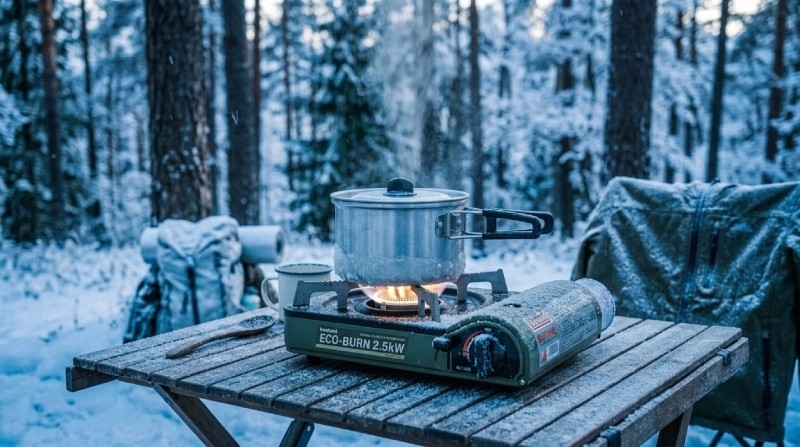
For a deeper breakdown of how temperature, wind, and altitude affect stove performance in real winter conditions, see our guide on how to choose the best portable gas stove and fuel for winter camping.
Fuel Type Selection: Butane vs. Propane Sourcing Comparison
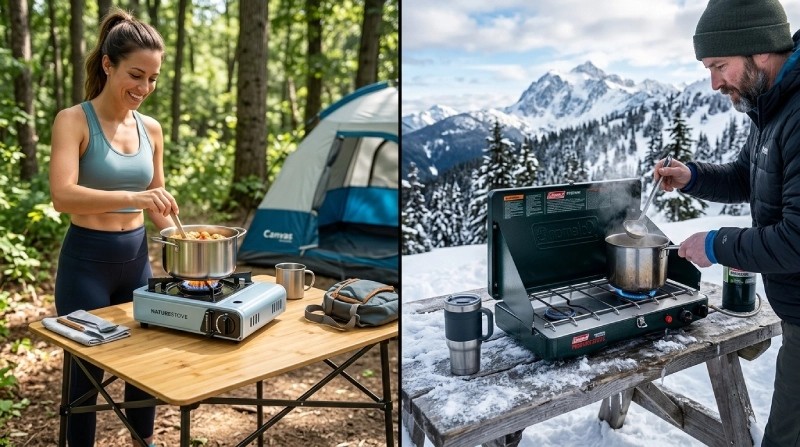
Working with an experienced camping stove supplier helps clarify how different fuel characteristics dictate outdoor stove sourcing, inventory segmentation, and target demographics.
| Feature / Fuel Type Selection | Butane Stoves | Propane Stoves | Decision Priority & Inventory Weight | Target Market Segment |
| System Profile | Monolithic, self-contained fuel bay. | Modular, multi-piece assembly. | High Priority for Retail: Maximize retail shelf-space efficiency due to a compact storage footprint. | Casual recreational campers, weekend travelers, and holiday consumers. |
| Climate Stability | Restricted performance near 0°C. | Reliable performance down to -40°C. | Critical Priority for Geography: Allocate butane inventory to spring/summer lines; reserve propane for cold-weather utility. | Alpine mountaineers, winter sports enthusiasts, and northern cold-zone retailers. |
Heat Output | Moderate, highly regulated flow. | High-velocity thermal output. | High Priority for Commercial: Propane is preferred where high-volume boiling speed is an operational requirement. | Mobile caterers, food trucks, and commercial outdoor events. |
Logistics Complexity | Integrated structural footprint. | External hoses, valves, and cylinders. | Moderate Priority for Returns: Butane minimizes loose component parts, lowering transit damage claims. | Emergency preparedness distributors and big-box general retail chains. |
Which Is Better for Outdoor Cooking: Butane or Propane?
Portfolio construction scales efficiently when utilizing a rule-based sourcing logic rather than focusing purely on product preference:
Rule 1: IF the end-user profile targets casual summer camping, leisure travel, or residential emergency-preparedness markets, then butane-powered appliances are the optimal choice due to low operational complexity and low unit costs.
Rule 2: IF the target distribution channel services high-altitude mountaineering, winter exploration, or remote industrial operations, THEN propane systems are mandatory to prevent severe cold-weather performance drops.
What Are the Limitations of Portable Butane Gas stoves?
Understanding specific product constraints allows quality control managers to evaluate how technical failure modes translate into direct business impacts within their target markets:
Vaporization Failure → Seasonal Demand Loss: Ambient cold slows gas expansion, doubling standard boil times. This reduces user satisfaction scores and causes inventory stagnation in cooler northern regions.
Wind Exposure → Customer Dissatisfaction Spikes: Open burner configurations suffer from flame displacement under light winds. Fuel efficiency drops by up to 50%, increasing operating costs for the consumer and driving negative retail reviews.
How Do You Choose the Right Portable Gas Stove for Your Needs?
Wholesale buyers must evaluate product samples through a strict tiered decision framework where safety parameters take absolute priority over product cost:
Priority 1: Safety and Compliance (Mandatory Filter): Appliances must hold verifiable regulatory certifications relevant to the destination market (such as CE for Europe, CSA for North America, or AGA for Australia). Stoves must integrate mechanical overpressure governors that automatically eject the canister if internal pressure passes safe limits.
Priority 2: Environmental Climate Mapping: Sourcing teams must cross-reference product design with local weather data. Unshielded single-burner units must be restricted from heavy coastal or high-altitude distribution channels.
Priority 3: Landed Cost Structure: Evaluate metal gauge thickness against shipping weight configuration. Sourcing must balance structural chassis thickness against container packing density to protect final landed profit margins.
What Are Common Outdoor Use Cases for Butane and Propane Stoves?
Strategic inventory tracking requires mapping structural designs directly to distinct buyer segmentation categories:
Retail Consumer Segment → Low Complexity Priority: Leisure campers and weekend travelers form a high-volume market. They prioritize a clean, integrated camping cooker because it offers low upfront acquisition costs, easy cleaning, and tool-free operational readiness.
Commercial and Utility Segment → Durability Priority: Construction crews, agricultural field teams, and mobile vendors require an outdoor catering stove. This group bypasses lightweight options, prioritizing thick-gauge steel frames, heavy load stability, and multi-burner durability.
Can Portable Gas Stoves Be Used for Wholesale or OEM Production?
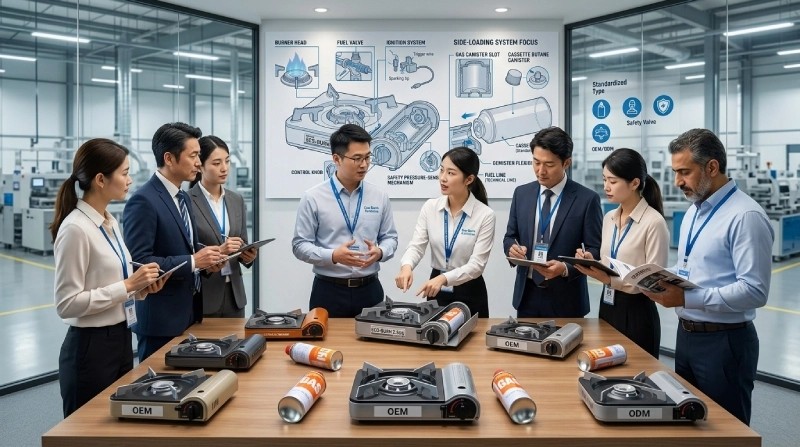
Industrial appliance factories specialize in high-volume, automated production optimized for private-label distribution. CHEFF is a gas stove manufacturer providing OEM/ODM solutions for global wholesale buyers, aligning production infrastructure with international regulatory standards. Successful bulk execution relies on factory alignment across three pillars: tiered MOQ flexibility, target-market safety certifications, and strict production lead time adherence.
Contract assembly lines provide options like specialized powder-coated body finishes, high-resolution laser-etched branding, and custom structural changes such as double-walled wind shields. Working with an export-compliant facility ensures that mass production runs maintain tight dimensional tolerances and follow international quality control rules.
FAQ
1. Can a portable butane gas stove be used indoors safely?
portable butane gas stoves are sometimes used indoors in well-ventilated environments, but they should never be operated in enclosed or poorly ventilated spaces. Both butane and propane produce carbon monoxide during combustion, so airflow is the key safety factor rather than fuel type.
2. Can butane stoves work in cold weather?
Butane fuel has a higher boiling point than propane, which means it requires warmer temperatures to vaporize properly. In cold environments below 0°C (32°F), gas pressure drops, resulting in weak flame output or ignition failure.
3. How long does a butane gas cartridge last?
A standard 220–227g butane cartridge typically lasts between 1.5 to 3 hours depending on flame intensity, cooking style, and environmental conditions. High flame settings significantly reduce runtime.
4. Why do some wholesalers prefer butane stoves over propane?
Wholesalers often prefer butane stoves for retail markets because they are lighter, easier to package, and more appealing for entry-level outdoor users. Propane systems are usually reserved for industrial or cold-region markets due to their higher performance requirements.
Final Procurement Conclusion
Butane and propane stoves serve different market environments and should be sourced accordingly. Butane is best for warm-weather, portable, and leisure-focused retail use, while propane is suited for cold climates, high-altitude conditions, and high-output commercial applications. Proper alignment with regional climate and user behavior is key to reducing returns and ensuring stable turnover.
For wholesale buyers, success depends on reliable OEM/ODM manufacturing, consistent quality control, and clear market positioning.
For scalable production and private-label development of outdoor gas stoves, CHEFF provides export-ready OEM/ODM solutions and supports global distributors with certification, customization, and stable supply capability. Contact CHEFF to discuss your sourcing requirements.