How to Maintain a Sintered Stone Gas Hob? Cleaning, Care and Troubleshooting Guide
- Share
- publisher
- CHEFF
- Issue Time
- Aug 12,2026
Summary
Sintered stone gas hob maintenance guide covering daily cleaning, safe products, stain removal, burner and ignition care, heat damage prevention, and a simple routine for long-term performance.

Quick Answer
Sintered stone gas hob maintenance is not just about keeping the stone surface clean. Although sintered stone is highly resistant to stains, heat and scratches, a gas hob also includes burners, ignition components and sealing areas that require regular care. The best maintenance routine combines gentle surface cleaning with proper burner and ignition care to prevent flame problems, ignition failures and premature component failures.
Introduction
Sintered stone gas hobs combine a durable stone surface with a built-in gas cooking system. Although the surface requires minimal maintenance in daily use, regular cleaning and proper care of burners, ignition parts and installation areas help maintain safety, appearance and cooking performance.
Based on years of experience in kitchen appliance manufacturing, we have found that consistent maintenance habits can significantly improve gas hob reliability and lifespan. Caring for a sintered stone gas hob does not require complicated routines—only the right cleaning methods and regular inspections. This guide shares practical maintenance steps to help keep both the sintered stone surface and gas system performing safely and reliably over time.
Why Does a Sintered Stone Gas Hob Need Regular Maintenance?
Although sintered stone is highly durable, regular maintenance remains important because a gas hob combines a durable surface material with mechanical and electrical cooking components.
Protect the sintered stone surface
Even though sintered stone offers excellent stain and scratch resistance, daily cooking can still leave grease, food residue and mineral deposits on the surface. Simple surface care prevents dullness and helps maintain the original finish of the hob.
Maintain burner performance
Uneven flames or ignition issues often start with blocked ports or misaligned parts. Regular gas burner maintenance supports efficient combustion, stable heat output and more consistent cooking performance.
Reduce repair costs
Unlike a standalone sintered stone surface, a gas hob includes mechanical and electrical components that need periodic inspection. In practice, regular maintenance helps identify small issues before they develop into more expensive repairs.
How Do You Clean a Sintered Stone Gas Hob Safely Every Day?
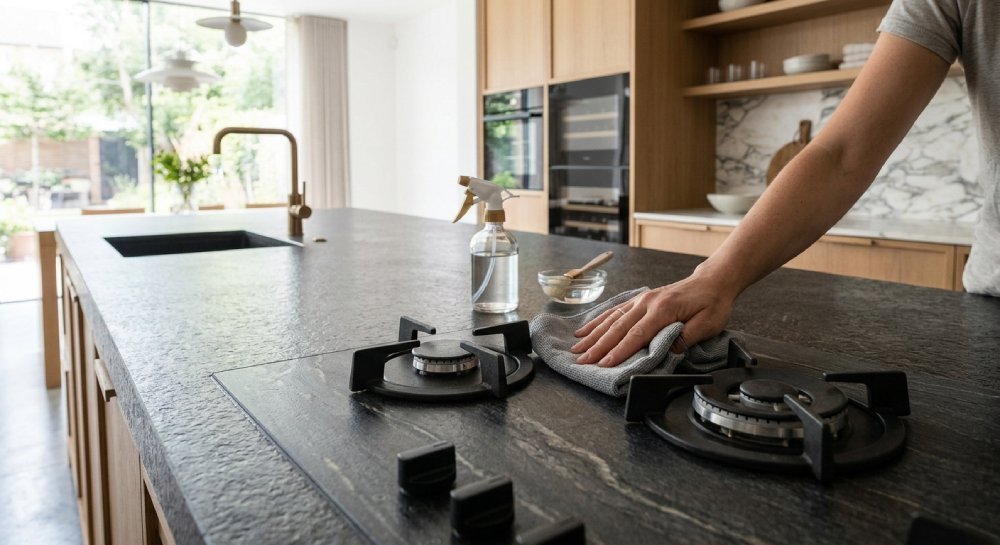
Daily cleaning prevents buildup and makes deeper cleaning easier later. Here is a reliable approach to sintered stone hob cleaning.
What Cleaning Products Are Safe for Sintered Stone Gas Hobs?
Stick to gentle options:
- Warm water
- Mild detergent or pH-neutral cleaner
- Soft sponge
- Microfiber cloth
These help remove daily residue while reducing the risk of surface damage.
Step-by-step cleaning process
Allow the hob to cool completely.
Remove loose food residue with a soft cloth or paper towel.
Apply a small amount of pH-neutral cleaner or mild detergent mixed with warm water.
Wipe the surface gently with a soft sponge or microfiber cloth.
Use a clean damp cloth to remove remaining cleaner residue.
Dry thoroughly with a clean microfiber cloth.
What should you avoid?
To protect the surface and surrounding components, avoid:
- Steel wool or abrasive pads
- Strong acid or alkaline cleaners
- Abrasive powders
- Wax or polishing products
- High-pressure steam cleaning around sealed joints
How Do You Remove Oil, Water Marks and Burnt Stains from a Sintered Stone Hob?
Address stains promptly. The longer grease or acidic food residue remains on the surface, the more difficult it becomes to remove completely.
| Stain Type | Recommended Cleaning Method |
|---|---|
| Cooking oil and grease | Warm water + mild detergent, gentle wipe |
| Water marks | Neutral cleaner, then dry thoroughly |
| Burnt food | Soften with warm water, then lift residue gently |
| Coffee/sauce | Clean immediately with mild cleaner |
Avoid aggressive scrubbing. Damaged surfaces are difficult to restore. These simple cleaning habits help maintain a consistent appearance without damaging the surface.
How Do You Maintain Gas Burners and Solve Common Ignition Problems?
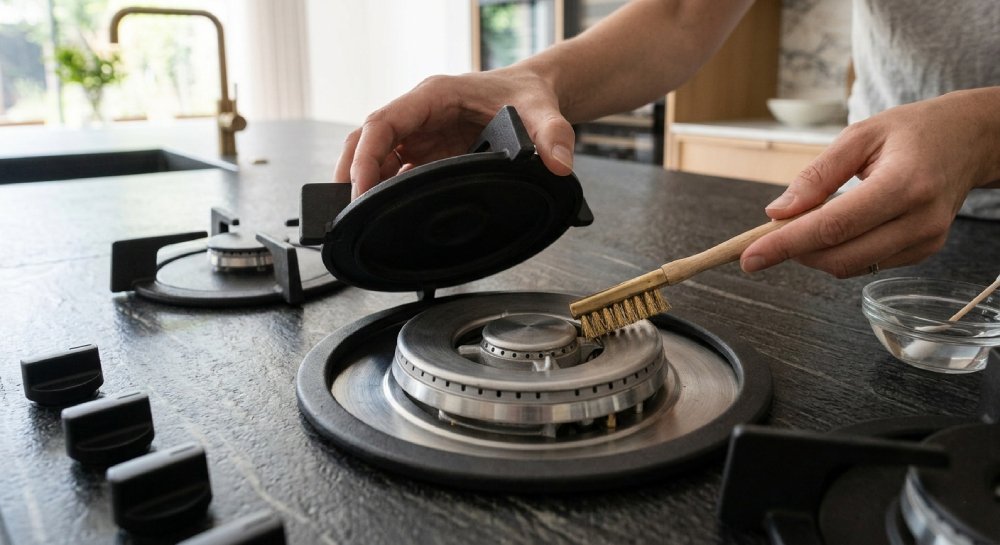
Surface care alone is not enough. Proper attention to burners and ignition components prevents many common problems and forms the core of gas hob troubleshooting.
How to clean burner caps
- Turn off the gas supply.
- Wait until all components cool completely.
- Carefully remove the burner caps and burner rings (if applicable).
- Wash them with warm water and mild detergent.
- Use a soft brush if needed to clear ports.
- Dry every part thoroughly.
- Reinstall carefully, ensuring correct positioning.
Never enlarge burner holes with needles or metal objects, as this may affect flame performance.
Common gas hob problems
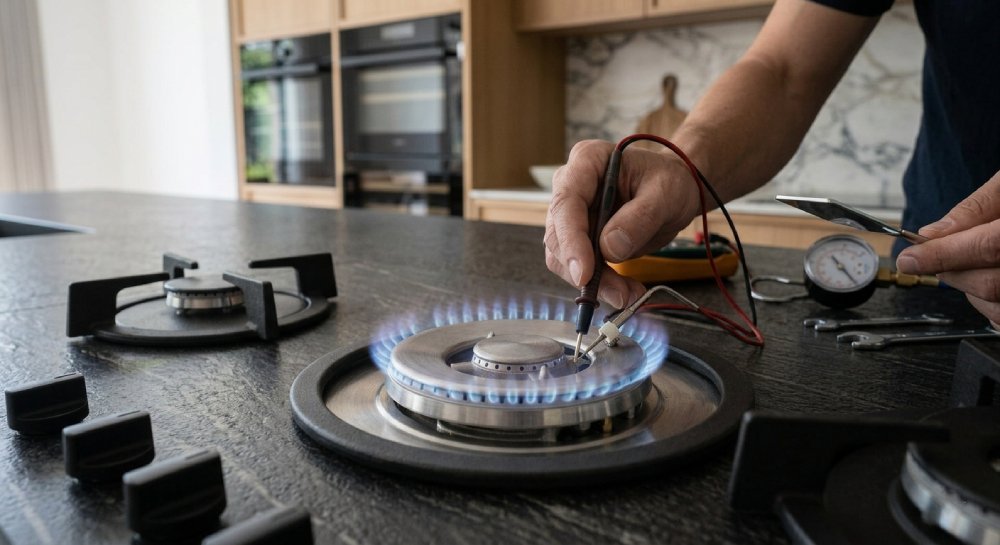
Why is my gas hob flame uneven?
Uneven or weak flames usually result from blocked burner holes, grease buildup, incorrect burner cap position or gas supply issues. Clean the parts thoroughly and reseat them properly. After cleaning and correct reassembly, flame performance often improves. If problems continue, professional inspection may be required.
Why does my gas hob keep clicking?
Continuous clicking often occurs after cleaning or spills when moisture remains around the ignition area, or when the burner cap is slightly misaligned. Dry the ignition area completely and check that the cap sits flat. Avoid operating the hob while moisture remains around the ignition area.
Why won’t my gas hob ignite?
Confirm the gas supply is on, then inspect burner cleanliness and the ignition electrode for dirt or moisture. Clean and dry these areas carefully. Do not attempt to repair internal gas valves or electrical components yourself. Contact a qualified technician if basic checks do not solve the issue.
How Can You Prevent Heat Damage and Cracks on a Sintered Stone Gas Hob?
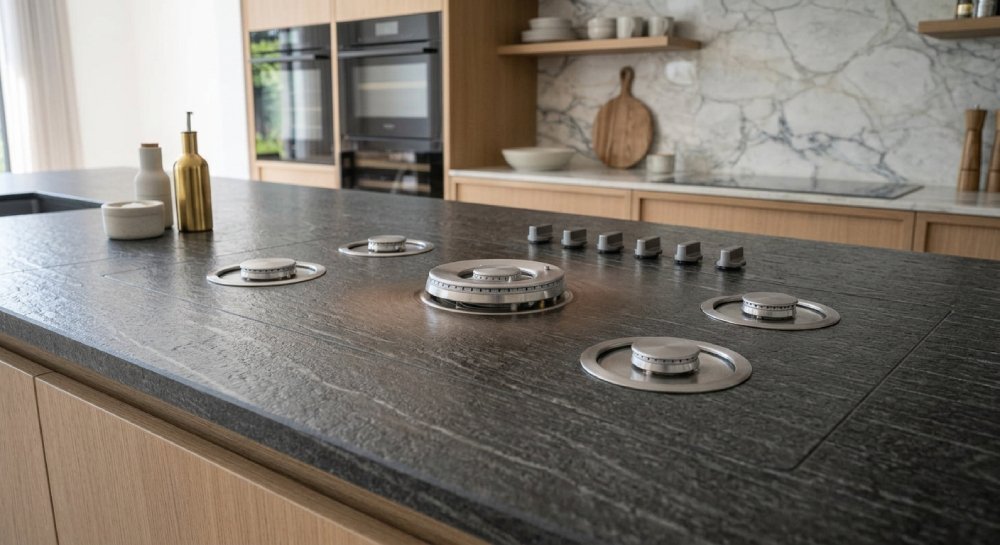
Sintered stone handles high temperatures well, yet sudden temperature changes still create risk. Avoid placing a hot pan on a cold surface or cleaning a hot hob with cold water.
Use heat-resistant mats or trivets when setting hot cookware aside. Keep the flame under the cookware rather than allowing it to contact the surrounding surface for extended periods.
Proper Installation Helps Prevent Long-Term Damage
Proper support around the cut-out area, suitable sealing materials and correct installation gaps help reduce stress caused by heat expansion and daily use. Selecting a properly designed hob and ensuring professional installation both contribute to lasting performance.
What Is the Recommended Maintenance Schedule for a Sintered Stone Gas Hob?
Consistency matters more than intensity. Follow this simple gas hob maintenance schedule:
| Frequency | Task |
|---|---|
| After cooking | Wipe the surface |
| Weekly | Clean burner caps |
| Monthly | Check flame condition and ports |
| Every 6 months | Inspect seals, edges and fittings |
Adjust the schedule based on cooking frequency and usage conditions, but keep the routine consistent. This simple routine helps protect appearance, safety and cooking performance over time.
FAQ: Sintered Stone Gas Hob Maintenance
Does a sintered stone gas hob need sealing?
Sintered stone is non-porous and normally does not require sealing. Regular cleaning and proper daily care are usually sufficient.
Can you use vinegar on sintered stone?
Sintered stone is generally resistant to mild acids, but neutral cleaners are recommended for regular maintenance, especially around metal components and finishes.
Can sintered stone crack from heat?
The material offers strong heat resistance, but thermal shock from sudden temperature changes should still be avoided.
How do you clean burner holes on a gas hob?
Use soft brushes and warm soapy water. Avoid sharp objects that can enlarge or damage the ports.
Conclusion
With proper cleaning habits and regular burner care, a sintered stone gas hob can maintain both its appearance and cooking performance for many years. Focusing on the complete system—surface plus burners and ignition—delivers the best long-term results.
CHEFF gas hobs combine durable materials, reliable burner systems and easy-care sintered stone surfaces designed for long-term performance in residential kitchens, hospitality projects and professional applications.